
The Mathematical Breakthrough Behind Better AI
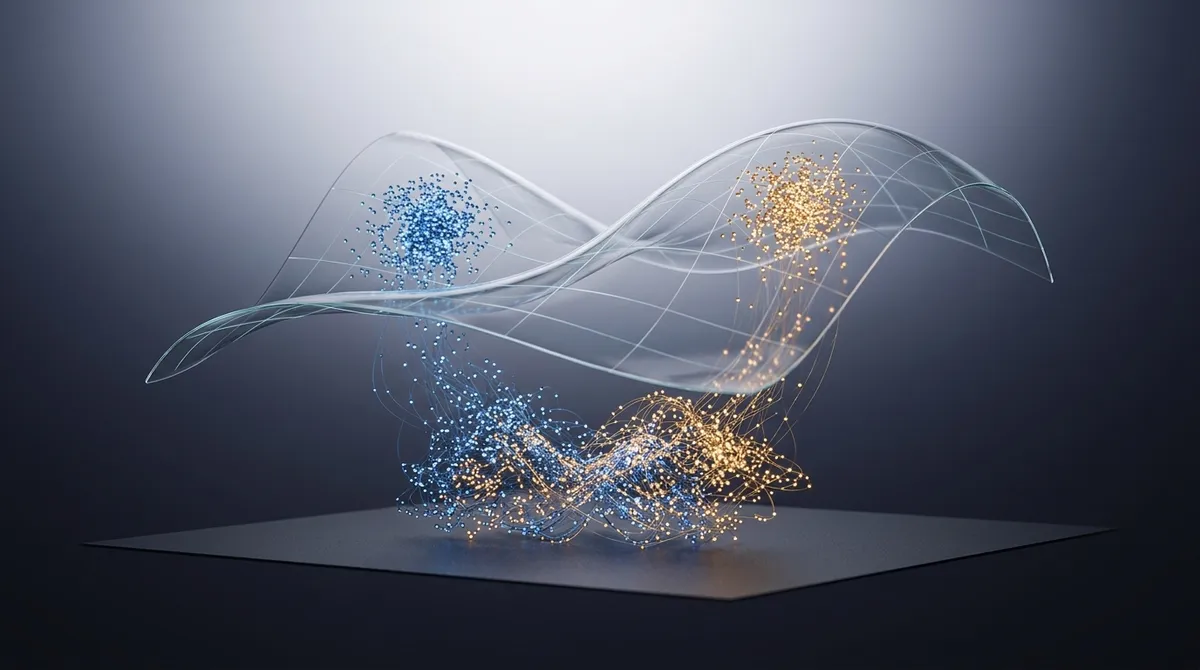
A groundbreaking study published in PNAS has finally explained why kernel methods—a fundamental technique in machine learning—are so remarkably effective at separating complex, high-dimensional datasets. According to the research, these methods leverage a richer geometric structure to amplify even the most subtle distributional differences into clearer, more detectable patterns.
This discovery addresses one of the core challenges in modern data science: determining whether two datasets are genuinely different or if apparent differences are simply due to random variation. Known as the two-sample testing problem, this question becomes increasingly difficult as datasets grow more complex and high-dimensional.
Why High-Dimensional Data Is So Challenging
The explosion of data in fields like artificial intelligence, genomics, and finance has created unprecedented challenges for data scientists and researchers. According to reports, high-dimensional datasets make it notoriously difficult to distinguish between meaningful patterns and random noise. Traditional statistical methods often fall short when faced with the complexity of modern data.
This is where kernel methods come into play. These mathematical techniques have been widely used in machine learning for years, but until now, researchers didn't fully understand the theoretical foundation for their remarkable effectiveness.
The Kernel Trick Revealed
The new research shows that kernel embeddings work by transforming data into higher-dimensional spaces where patterns become more apparent. This process, often called the "kernel trick," allows machines to detect subtle relationships that might be invisible in the original data representation.
According to the study, this transformation uses hidden geometric structures to magnify distributional differences. Even when two datasets appear nearly identical in their original form, the kernel embedding can reveal meaningful distinctions by mapping the data into a space with richer mathematical properties.
Real-World Applications Across Industries
The implications of this theoretical breakthrough extend far beyond academic mathematics. In genomics, these methods could improve the detection of genetic variations and disease markers. Financial institutions could use enhanced kernel methods to better identify market anomalies and risk patterns.
For artificial intelligence applications, this deeper understanding could lead to more powerful statistical methods and improved machine learning algorithms. The research provides a stronger theoretical foundation for tools that are already widely deployed across various industries.
Making Abstract Math Practical
What makes this discovery particularly significant is how it bridges the gap between abstract mathematical theory and practical data science applications. The research demonstrates that seemingly esoteric geometric concepts have direct, measurable impacts on real-world problem-solving capabilities.
According to reports, this theorem gives researchers and practitioners a clearer understanding of when and why kernel methods succeed. This knowledge could guide the development of even more sophisticated tools for handling complex datasets.
The Future of Data Analysis
As datasets continue to grow in size and complexity, the ability to accurately distinguish between genuine patterns and random noise becomes increasingly crucial. The insights from this PNAS study could inform the next generation of machine learning algorithms and statistical analysis tools.
The research highlights how advanced mathematical concepts—in this case, hidden geometric structures—can power practical solutions to everyday data science challenges. For technology enthusiasts and professionals working with complex datasets, this represents a significant step forward in understanding why certain AI methods work so effectively.
This breakthrough underscores the importance of theoretical research in driving practical technological advances, showing how abstract geometry can help machines detect patterns that humans might miss entirely.