NASA Achieves Major Milestone for Next-Generation Space Observatory
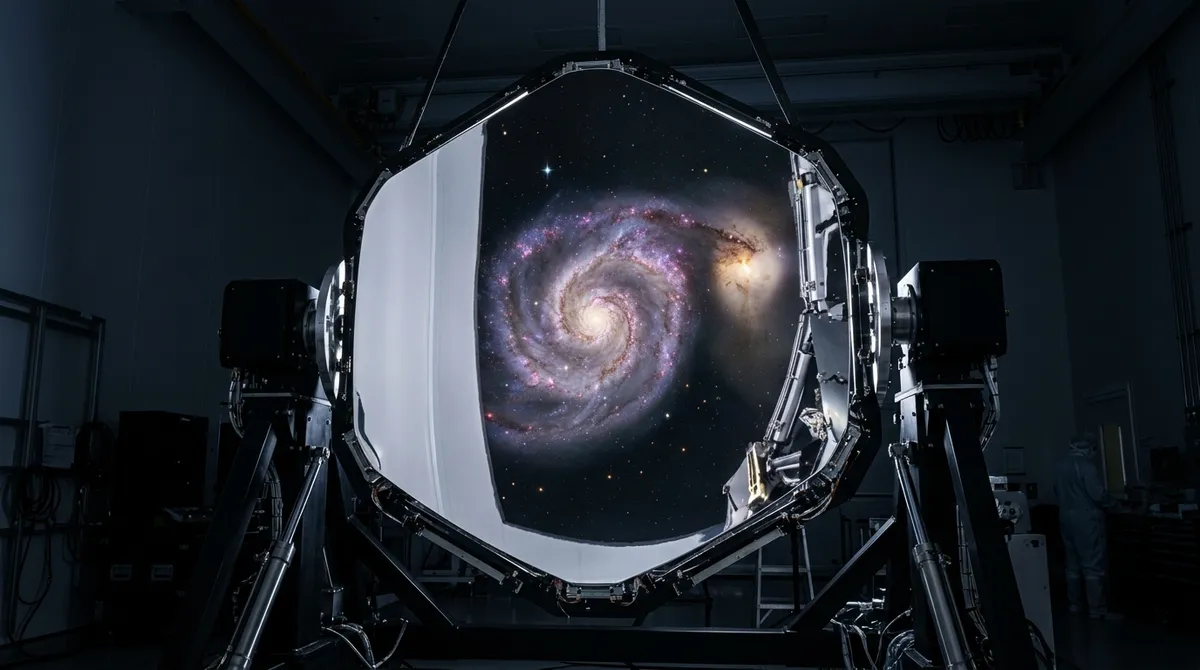
NASA has successfully completed the final inspection of the Roman Space Telescope's primary mirror, marking a significant step toward launch readiness for what promises to be a transformative new era in cosmic discovery. The massive 2.4-meter infrared instrument represents years of precision engineering and international collaboration.
Engineering Marvel in Space Technology
The primary mirror showcases extreme precision engineering that pushes the boundaries of current technology. According to reports, the mirror features an ultra-thin silver coating that is hundreds of times thinner than human hair, demonstrating the incredible level of detail required for space-based astronomy instruments.
This level of precision engineering represents decades of development behind this single component, highlighting the complex challenges involved in creating instruments capable of operating in the harsh environment of space while maintaining the accuracy needed for groundbreaking scientific observations.
Complementing Webb's Cosmic Vision
The Roman Space Telescope's infrared capabilities are designed to differ from and complement the James Webb Space Telescope, according to reports. While both telescopes operate in the infrared spectrum, Roman's specific design and capabilities will enable unique observations that expand our understanding of the universe in ways that complement existing space-based observatories.
The telescope's infrared technology will allow scientists to peer through cosmic dust and observe phenomena that are invisible to optical telescopes, opening new windows into the universe's most mysterious regions.
Targeting Cosmic Mysteries
The Roman Space Telescope is specifically designed to solve some of the most pressing cosmic mysteries facing modern astronomy. According to reports, the telescope will focus on three key areas: dark energy research, the search for habitable exoplanets, and studies of galaxy formation.
These research priorities position Roman as a crucial tool for answering fundamental questions about the nature of our universe, including the mysterious force driving cosmic expansion and the potential for life beyond our solar system.
International Collaboration and Scientific Anticipation
The completion of the mirror inspection represents the culmination of international collaboration spanning multiple years. According to reports, scientists are particularly excited about what Roman will observe first once it becomes operational.
The telescope's capabilities are expected to enable groundbreaking observations that will advance our understanding of dark energy, help identify potentially habitable exoplanets, and provide new insights into how galaxies formed and evolved throughout cosmic history.
Looking Toward Launch
With the primary mirror now cleared for flight readiness, the Roman Space Telescope is nearing its launch timeline. The successful completion of this critical component inspection brings the project closer to deployment and the beginning of its scientific mission.
The telescope represents a major leap forward in space-based astronomy technology, building on lessons learned from previous missions while incorporating cutting-edge innovations in mirror design and infrared detection capabilities.
Impact on Future Space Exploration
The Roman Space Telescope's development showcases how precision engineering and international cooperation can create instruments capable of transforming our understanding of the cosmos. The successful inspection of its primary mirror demonstrates that the technology needed for next-generation space observatories is ready for deployment.
As the telescope moves toward launch, it promises to open new chapters in astronomical research and provide data that could reshape our understanding of fundamental cosmic processes and the potential for life elsewhere in the universe.